
Real vs. Synthetic Oud: How to Tell What You're Actually Buying
Search "oud oil" or "oud chips" online and you'll find a flooded market, a lot of it synthetic. Some of that is honestly labeled as fragrance oil, which is fine. The problem is how much of it gets sold as natural agarwood when it isn't. If you're new to oud, there's no easy way to tell the difference just by looking at a product photo, so here's how we actually verify wood and oil ourselves, and how you can apply the same checks.
Why Synthetic Oud Is Everywhere
Real agarwood takes decades to form inside a tree and only occurs naturally in a small fraction of wild Aquilaria trees. That scarcity makes genuine oud expensive, sometimes more per gram than gold. Synthetic and lab-blended alternatives exist because they're cheap and consistent to produce. That's not inherently a problem, plenty of fragrance oils are honestly sold as "oud-inspired" or "oud accord." The problem starts when synthetic material gets labeled and priced as if it were wild, natural agarwood.
The Water Test

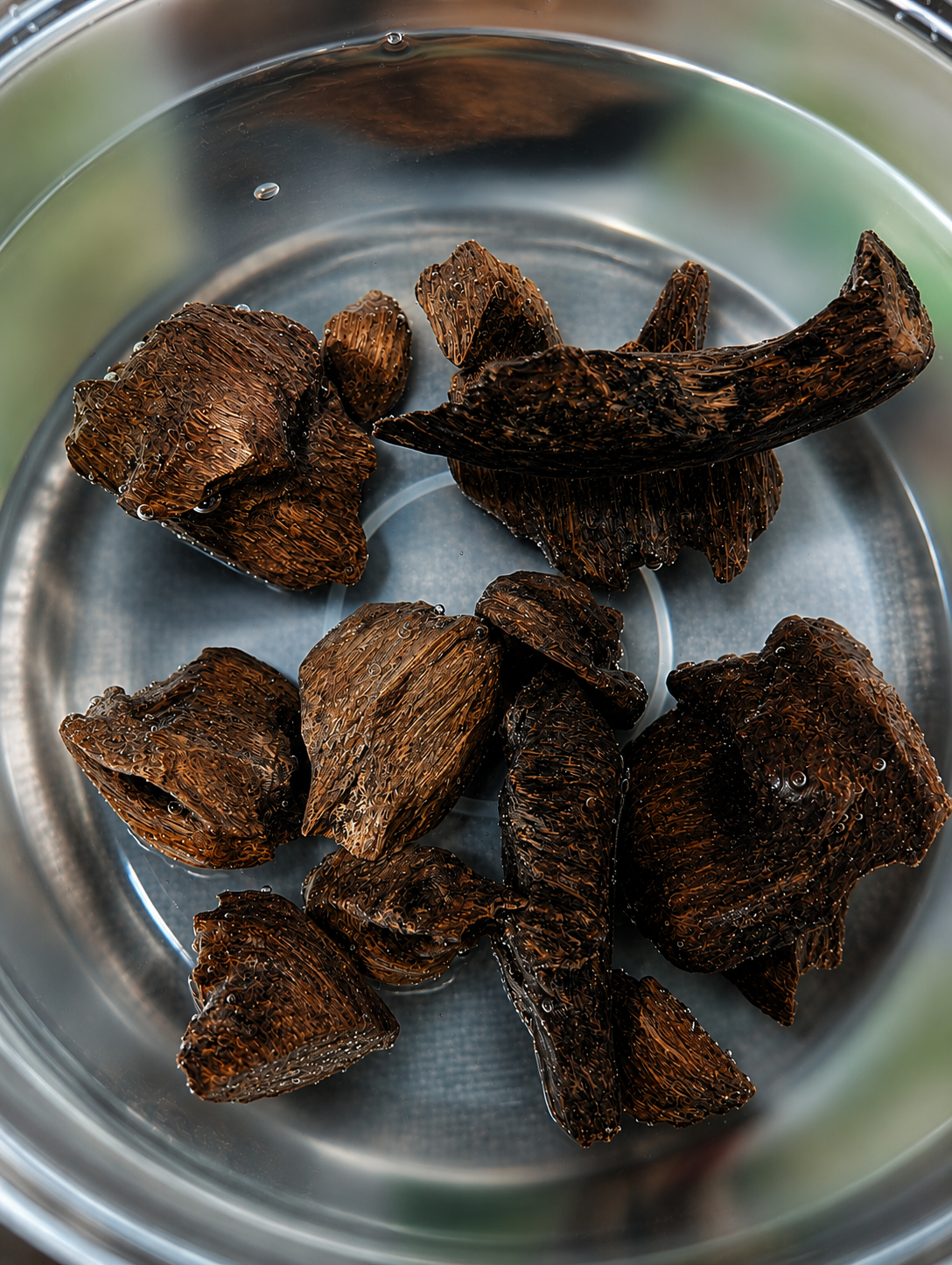
We've written before about what sinking grade actually means, but it doubles as an authenticity check. Real resin is denser than water. A piece that's genuinely saturated with natural resin will sink, not float. Wood that's been artificially dyed or lightly dipped in synthetic oud oil to fake a resin look will almost always float, because the coating never penetrated the wood the way real resin does. This won't catch every fake, lower grades of real oud float too, but a piece marketed as "sinking" or "King grade" that floats is an immediate red flag.
The Burn Test
This is the test that actually tells you the most, and it's why we started filming burn tests on our specimen-grade pieces instead of just describing them in a listing. Real oud smoke changes character as it heats: it opens sweet, moves into woody and balsamic notes, and settles into something smoky and resinous, all from the same small chip. It's a layered, evolving smell.
Synthetic or heavily dipped wood tends to do the opposite. The smell is flatter and more one-note from start to finish, because it's coming from a handful of stable aroma compounds rather than the hundreds of natural ones real resin contains. It also often carries a chemical tang underneath the fragrance, sometimes with visibly sootier, blacker smoke, that a genuine burn doesn't produce. If a burn smells sharp, headache-inducing, or the same at minute one as minute five, that's worth being suspicious of.
The Skin Test, for Oils

Pure oud oil evolves on skin. Apply a small amount to a pulse point and it should smell noticeably different at the ten-minute mark than it does after an hour, as your skin's warmth draws out different layers of the oil. Synthetic oud fragrance oil is built to smell the same throughout, since it's formulated from a fixed set of aroma molecules rather than a complex natural distillate. If an "oud oil" smells identical an hour in as it did straight out of the bottle, it's very likely synthetic, or heavily cut with carrier oil and fragrance compounds.
Texture and Visual Cues
Natural resin in wood is uneven. Streaks, patches, and variation in color and density across a single piece are normal, because resin accumulates unevenly as a tree responds to injury over years. Dipped or dyed wood, by contrast, is often suspiciously uniform, the same dark color all the way through, sometimes with a coating that looks more like a glaze than natural oil sheen. Weight is a clue too: genuinely resin-dense wood feels heavy for its size in a way that's hard to fake with dye alone.
Price Is a Signal, Not Proof
If a listing claims "AAA grade" or "sinking" oud at a price well below what that density of wood actually costs to produce, that gap is worth questioning. At the same time, a high price alone doesn't prove authenticity, it's easy to charge a premium for something that was never tested. The tests above matter more than the price tag.
What We Do at Noble Aroma
We sink-test every batch we grade as sinking or King grade rather than taking a supplier's word for it. For our specimen-grade pieces, we film the burn test instead of only describing it, so you can see the smoke behave the way we're describing it, not just read a claim. Our AAA oud oils, Wild Kynam, Rare Wild Hainan, and Hainan Insect, are CO2-extracted from verified source wood, and we say so plainly on the listing rather than leaving it vague. If you're ever unsure about a specific batch or listing, email us at support@noblearoma.com, we'd rather explain exactly what we know than have you guess.
New to oud entirely? Start with our beginner's guide before you buy your first piece.