
How to Tell Real Agarwood Chips from Fake or Adulterated Wood
Share
Real agarwood chips are expensive because genuine resin-infused wood is rare. Only a small percentage of Aquilaria trees ever produce it, and it can take years to form. That price gap is exactly why fake agarwood is such a common problem. Plain wood soaked in synthetic oud oil, dyed to look darker, or dusted with fragrance oil is regularly sold online as "natural" or "wild" agarwood, especially at prices that seem too good for the grade being advertised.
Here are the four checks we use ourselves, and that you can do at home before or after a purchase.
1. Look at the grain and resin lines
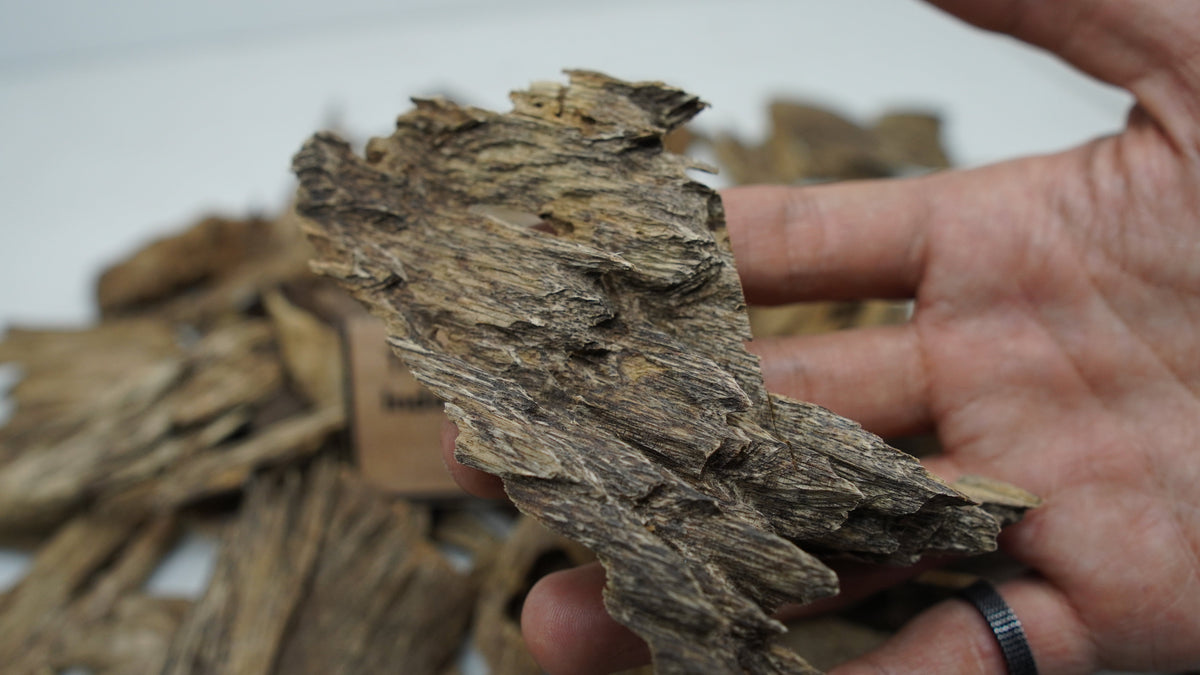
Genuine agarwood shows dark, resin-saturated streaks running unevenly through lighter, untouched wood, since the resin forms in response to injury or fungal infection and never spreads perfectly evenly. Fake chips are often uniformly dark or black all the way through, because the color comes from dye or soaking rather than resin that formed naturally inside the wood over years.
2. Check the weight
Resin is dense. A genuine high-grade chip, especially sinking grade, feels noticeably heavier than its size suggests, dense enough that a true sinking-grade piece will sink in water rather than float. Fake or low-resin chips feel light and hollow for their size, because there's little to no actual resin content adding weight.
3. Do a burn test
This is the most reliable test. Hold a small piece near a flame (not directly in it) or place a sliver on a heat-safe surface with an electric burner. Real agarwood releases a complex, evolving aroma, sweet and woody, sometimes slightly animalic or smoky, that builds in layers as it heats. Fake chips smell flat, one-dimensional, or distinctly like the synthetic oil or perfume they were soaked in, and that smell often stays the same instead of evolving.
4. Notice how the scent lingers
Genuine agarwood's fragrance clings to a room or to fabric for hours after burning, and it changes character as it cools. Synthetic-soaked wood tends to smell strong for a few minutes and then fades quickly, because the fragrance was sitting on the surface rather than distributed through resin inside the wood.
Why grading still matters
None of this means every inexpensive chip is fake. Lower grades of real agarwood exist and are priced accordingly. What these tests catch is wood with little or no genuine resin being sold as something it isn't. Reputable sellers will tell you the grade, origin, and resin percentage of what you're buying; if a listing avoids specifics or the price is dramatically below market for the grade claimed, treat it as a red flag.
Every batch of chips we carry is graded and sourced from named regions in Indonesia: Kalimantan, Papua, and Sumatra, so you always know what resin content and origin you're paying for. You can browse our current graded agarwood chips to see the grading listed on each product.