
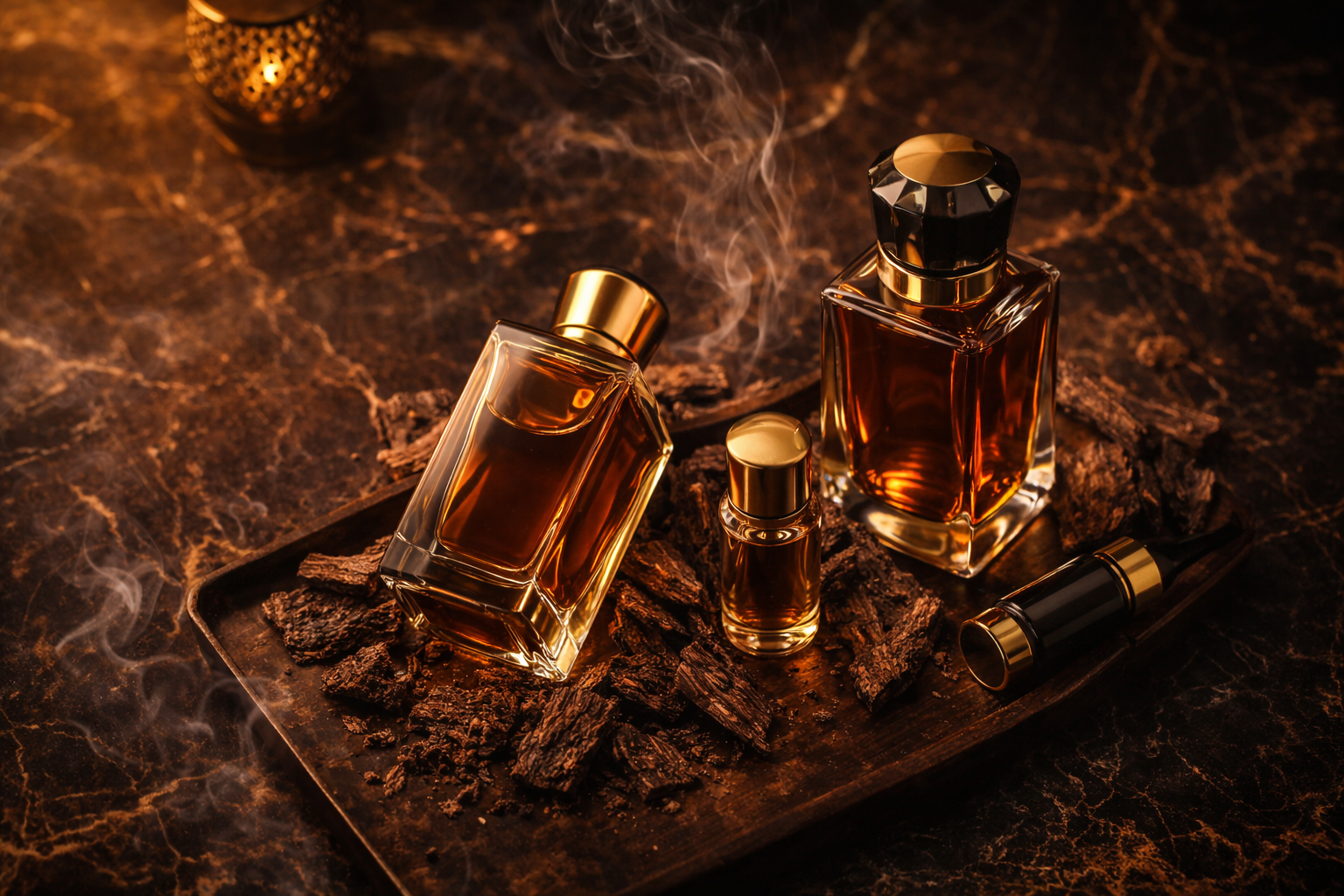
How to Burn Oud Chips and Bakhoor Properly
If you've ever burned an oud chip and thought "that's it?", the wood probably wasn't the problem. Technique matters as much as grade. The same piece of oud can smell flat and smoky at one temperature and layered, sweet, and complex at another. Here's how we burn oud ourselves, and how to get the most out of whatever you're burning.
Why Heat Control Is the Whole Game
Oud resin releases its aroma compounds gradually as it heats. Go in too hot, too fast, and you burn off the lighter top notes before you even get a chance to smell them, jumping straight to a harsh, smoky, almost burnt smell. Too cold, and the resin barely melts, so you get very little scent at all. The sweet spot is low, steady heat that coaxes the fragrance out in stages rather than torching it. This is true whether you're using traditional charcoal or a modern electric burner, the tool just changes how precisely you can control it.
Method One: Charcoal (Traditional)

This is the method used for centuries, and it's still the most accessible way to start if you already have a traditional clay or metal burner and quick-light charcoal discs, both widely available.
Steps:
- Light a charcoal disc with a lighter or match until it's fully caught and glowing, usually 1-2 minutes. Let it ash over slightly rather than using it while still sparking.
- Place the lit charcoal in your burner, on top of sand or ash if your burner uses it, to insulate the base and slow the heat transfer.
- Wait 2-3 minutes for the charcoal to mellow. This is the step people skip, and it's the reason charcoal-burned oud so often smells scorched. Fresh charcoal is much hotter than it needs to be.
- Place a small piece of oud chip or a pinch of bakhoor on top, off to the side of dead center if your burner runs hot, not directly on the hottest point.
- Let it smoke gently. If it's producing thick black smoke or you smell burning rather than fragrance, move the chip further from the charcoal's center or wait longer before adding more material.
Charcoal is forgiving in some ways and unforgiving in others: it's cheap and simple, but the heat curve is fixed once it's lit. You're managing distance and timing rather than an exact temperature.
Method Two: Electric Burner (Precise)

An electric burner like our Subitism Electric Oud Burner solves the biggest limitation of charcoal: you can set and hold an exact temperature instead of managing a cooling coal. No charcoal, no ash, no open flame, and the same setting is reproducible every time.
General temperature guide by material:
- 60-150C — delicate material: rare kynam, fine dehn oud, precious attar. These have subtle top notes that get destroyed by higher heat.
- 150-250C — most Indonesian oud chips, traditional bakhoor, and resins. This is the range most people should start in.
- 250-420C — hearty, dense chips and bakhoor that can handle more intensity without breaking down.
Steps:
- Set the dial to a low temperature to start, around 150C if you're not sure what you're burning.
- Place 1-2 small chips directly on the heating plate, no charcoal or intermediary needed.
- Wait and smell. If the aroma is faint, raise the temperature in small increments rather than jumping straight to the top of the range.
- Once you find the setting that works for a specific type of oud, note it. Different origins and grades genuinely respond differently, and this is where an electric burner earns its price over charcoal: once you've dialed it in, you can repeat it exactly.
Our Oud Starter Kit pairs the Subitism burner with AB grade Kalimantan chips specifically because that combination is the easiest, most forgiving way to learn temperature control before moving on to higher grades.
A Few Things That Trip People Up

Using too much material at once. A small piece, roughly the size of a grain of rice to a small pea, is plenty for a single burn. Oud is meant to be experienced in small amounts, not stacked into a burner all at once.
Burning higher grades at the same heat as AB grade. Denser, higher-resin wood (Super Plus, Double Super, Sinking, King Grade) tends to release its aroma at slightly lower temperatures than lighter grades, since there's more resin to work with even at gentle heat. If a King Grade piece smells scorched, you're almost certainly running it too hot.
No ventilation. Oud smoke is meant to be enjoyed in a room with some airflow, not sealed up tight. A cracked window or door is enough. Too little airflow makes even a well-burned piece smell heavier and smokier than it should.
Reusing a chip immediately. Once a chip has fully released its aroma and stops smoking, it's spent. Let your burner cool and start fresh rather than pushing a used piece for more.
Storing What You Don't Burn
Keep unused chips and bakhoor in a cool, dry, airtight container away from direct sunlight. Humidity and heat both degrade resin over time, and direct light can fade some of the more delicate aromatic compounds. Properly stored, oud chips hold their quality for years.
Questions
If you're not sure what temperature to start at for a specific piece you bought from us, email support@noblearoma.com and we'll tell you what's worked for that batch. We test everything we sell before it goes on the site, so we usually already know.